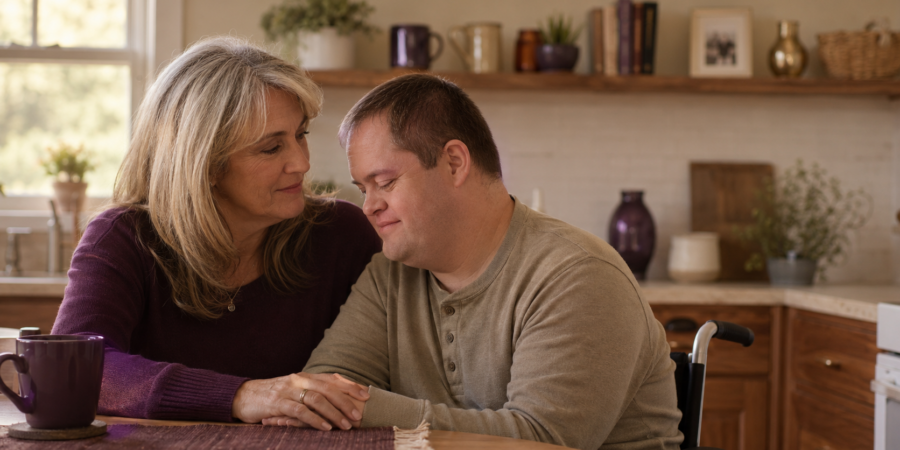
The Questions We Hear Most From Carers Planning for a Child With Disability.
The question most parents carry quietly
Most of the parents and carers we sit down with have been carrying the same question for years before they ever say it out loud: what happens to my child when I’m no longer the one holding everything together?
It’s rarely the first thing said in a conversation. It tends to come out after the small talk, after the paperwork, sometimes after a long pause. Planning for a child with disability often starts exactly this way, quietly, and usually later than a parent would like. If you’ve been sitting with these same worries for a while, you’re not behind. You’re exactly where most of the families we work with are when they first reach out.
This article brings together the questions we’re asked most often in these conversations, along with the general, grounded answers we can offer. It isn’t personal advice, and it isn’t a substitute for a proper conversation about your own situation. But it might be the thing that helps you feel less alone with the question, and clearer on what to ask next.
The ten questions we hear most about planning for a child with disability
1. What happens to my child if I die without a plan in place?
It depends on your child’s age, capacity, and what’s already in place. Once your child is an adult, no one else automatically inherits your authority to make decisions for them. Some informal arrangements might continue, but bigger decisions about accommodation, healthcare and finances often need formal authority. Without a valid appointment already in place, someone may have to apply to a tribunal for a guardianship or financial management order.
A will controls your estate, not parental authority. It can’t hand that over to someone else for an adult child. That’s why planning in your situation needs to cover more than the will: finances, decision-making, housing, support relationships, and the practical details someone else would need to step in.
2. Who will make decisions for my child if I can’t?
It depends on your child’s age and capacity. An adult with the required capacity can appoint their own enduring guardian and attorney, though the names and rules differ between states and territories.
A parent can’t just appoint these people on their adult child’s behalf if the child doesn’t have capacity to do it themselves. That usually means applying to a tribunal for a guardian or financial manager instead. This trips up a lot of families, so it’s worth getting legal advice early on what’s actually available where you live.
A parent’s automatic authority ends when a child turns 18, disability or not. Whatever’s needed after that has to be set up separately, under the law of your state or territory.
3. Where will my child live if I’m no longer able to care for them?
Housing is often the biggest unknown for the families we speak with, even more than the financial side. Options can include staying in the family home, moving into NDIS-funded Supported Independent Living or Specialist Disability Accommodation, or living with a sibling or other family member. Each of these generally needs real lead time to arrange properly, and none of them resolves itself through a will alone.
It’s often the piece families put off longest, simply because it’s the hardest one to picture.
NDIS access and plan funding are not asset or means tested. What can be affected by an inheritance is a Centrelink payment, such as the Disability Support Pension, since that is assessed under an income and assets test. The two systems work differently, and it’s worth keeping that distinction in mind through the next few questions.
4. Will my child lose their pension or NDIS support if they inherit money from me?
These two work differently, so it’s worth separating them. NDIS access and plan funding aren’t asset or means tested, so an inheritance generally doesn’t put that support at risk. What it can affect is a means-tested Centrelink payment like the Disability Support Pension. Whether it does, and by how much, depends on the amount inherited, the person’s other assets and income, whether they own a home, and how the money is used afterwards.
For some families, this is where a Special Disability Trust may be worth considering. Other trusts can form part of an estate plan too, but they don’t automatically get the same Centrelink concessions. What’s right here depends on your child’s circumstances and the current rules, so it’s worth working through with someone who can look at your situation directly.
Structures that matter most when planning for a child with disability
5. Should I set up a Special Disability Trust?
A Special Disability Trust can hold and manage assets for a child with a severe disability, and may get concessional treatment under the Centrelink means test for the Disability Support Pension, for your child and sometimes for you as the contributing parent too. That’s separate from NDIS eligibility, which isn’t means tested. Whether an SDT is right for you depends on your child’s needs, your family’s assets, and how it fits the rest of your estate plan, so this genuinely needs individual advice.
Creating a trust and qualifying for the Special Disability Trust concessions aren’t the same thing. The beneficiary, the deed, the trustees, how funds are used, and reporting all have to meet the social security rules.
We’ve seen trusts sit on paper for years without ever having their treatment confirmed, which meant they weren’t giving the family the protection they thought they had. Get the structure reviewed, and confirm its treatment with Services Australia, rather than assuming the concessions apply just because the deed says “Special Disability Trust.” This isn’t something to draft or set up without specialist advice.
“Planning while you’re well and able to lead the process gives your family real options. Planning under pressure, later, tends to leave far fewer.”
6. Should I leave my estate equally between my children?
Not necessarily. An equal split can unintentionally disadvantage a child with disability, especially if a direct inheritance affects a Centrelink payment they rely on. Your will may need to work alongside a trust or other structure, rather than standing alone, so the different parts of your plan pull in the same direction.
7. What happens if my other children can’t or won’t take over caring for my child?
If a sibling is expected to take on a caring or financial role down the track, that’s often assumed rather than actually discussed, and it can cause real difficulty later: resentment, or a role nobody agreed to. Naming the plan clearly, and having the conversation while you can lead it, tends to go far better than leaving siblings to work it out later.
Where there’s no sibling, or that role was never confirmed, it matters even more to have your child’s decision-making arrangements properly considered and a care plan documented, since there’s no informal backup to fall on.
8. What if I become unable to care for my child before I die, not just after?
This matters just as much as death, and it’s the piece most families haven’t thought through. Illness, injury or ageing can end a parent’s caregiving ability well before death does. Think about what happens if you’re no longer able to coordinate your child’s care while you’re still alive. That might mean reviewing your own enduring documents, lining up backup support people, writing down your child’s routines and preferences, and having a real plan for housing, services and money in the meantime. One thing worth knowing: your own enduring guardian or attorney manages your affairs, not your child’s. That’s a separate piece of planning.
For many of the parents we speak with, this is actually the more frightening question. Death, at least, has a plan attached to it in most people’s minds. A stroke, a diagnosis, or a slow decline in your own health often doesn’t.
9. How do I start this conversation with my child?
If your child can participate, involving them, to whatever extent makes sense, is usually better than deciding everything on their behalf. Many families find it easier to raise the topic gradually, and to do it with a professional who can help frame it honestly without it being frightening.
There’s no single right answer to how much to share, or when. But the tension between wanting to prepare your child and wanting to protect them is one almost every family in this position feels.
10. When should I start planning for this?
Many parents tell us they’ve worried about this question for years before beginning formal planning. Planning is usually easier when it starts well before a crisis, since it preserves more options and avoids decisions being made under pressure.
There’s no perfect moment. But there is a real difference between planning while you’re well and able to lead the process, and planning under pressure, later, when choices have narrowed.
Why planning for a child with disability can’t wait for a crisis
No structure removes all future uncertainty. A trust drafted broadly enough to accommodate changing circumstances, and reviewed periodically, may work better than one designed around a single fixed scenario, but no arrangement can guarantee an outcome.
There is rarely one document that solves everything. Good planning means recording what matters, putting the right arrangements in place, and reviewing them as your child’s circumstances change.
If any of these questions has been sitting with you, quietly, for a while, that’s not a sign you’ve left it too late. It’s usually the sign that it’s time to have the conversation.
Ready to talk through your own situation?
A single conversation is often enough to see clearly which of these questions apply to your family, and what to do about them. HFI works with parents and carers to understand the financial and Centrelink implications of planning for a child with disability. Where legal documents or formal appointments are needed, we can work alongside your solicitor and other professional advisers so the financial and legal parts of the plan fit together.
Book an Appointment Read: Special Disability Trust FAQsRelated reading
- Special Disability Trusts, Services Australia
- NDIS access and eligibility, National Disability Insurance Agency
- Disability Support Pension, Services Australia
- Social Security Act 1991 (Cth), current compilation, Federal Register of Legislation
- HFI: Special Disability Trust FAQs
- HFI: Estate Planning for Pension Recipients
Important information
This article is general information only and does not take into account your personal circumstances. It isn’t personal financial or legal advice. Centrelink, NDIS, and taxation rules referenced here are general in nature, subject to change, and can depend heavily on individual circumstances. Special Disability Trust eligibility, deed requirements, and Centrelink recognition processes should be confirmed with a specialist adviser and, where relevant, a solicitor before any documents are prepared or assets transferred. Guardianship and enduring power of attorney arrangements are governed by state and territory law and vary accordingly. Please seek advice from a licensed professional before acting on anything discussed here.
Health & Finance Integrated is a Corporate Authorised Representative of Able Financial Services, ABN 27 646 319 164, AFSL 530596, Shop 6, 23 Hassall St, Parramatta 2150 NSW.