
Can Centrelink Reduce a Compensation Preclusion Period for Medical Reasons?
Overview
If you’ve received a compensation settlement and Centrelink has stopped your Disability Support Pension or another payment, you may be wondering whether your medical condition could shorten the preclusion period.
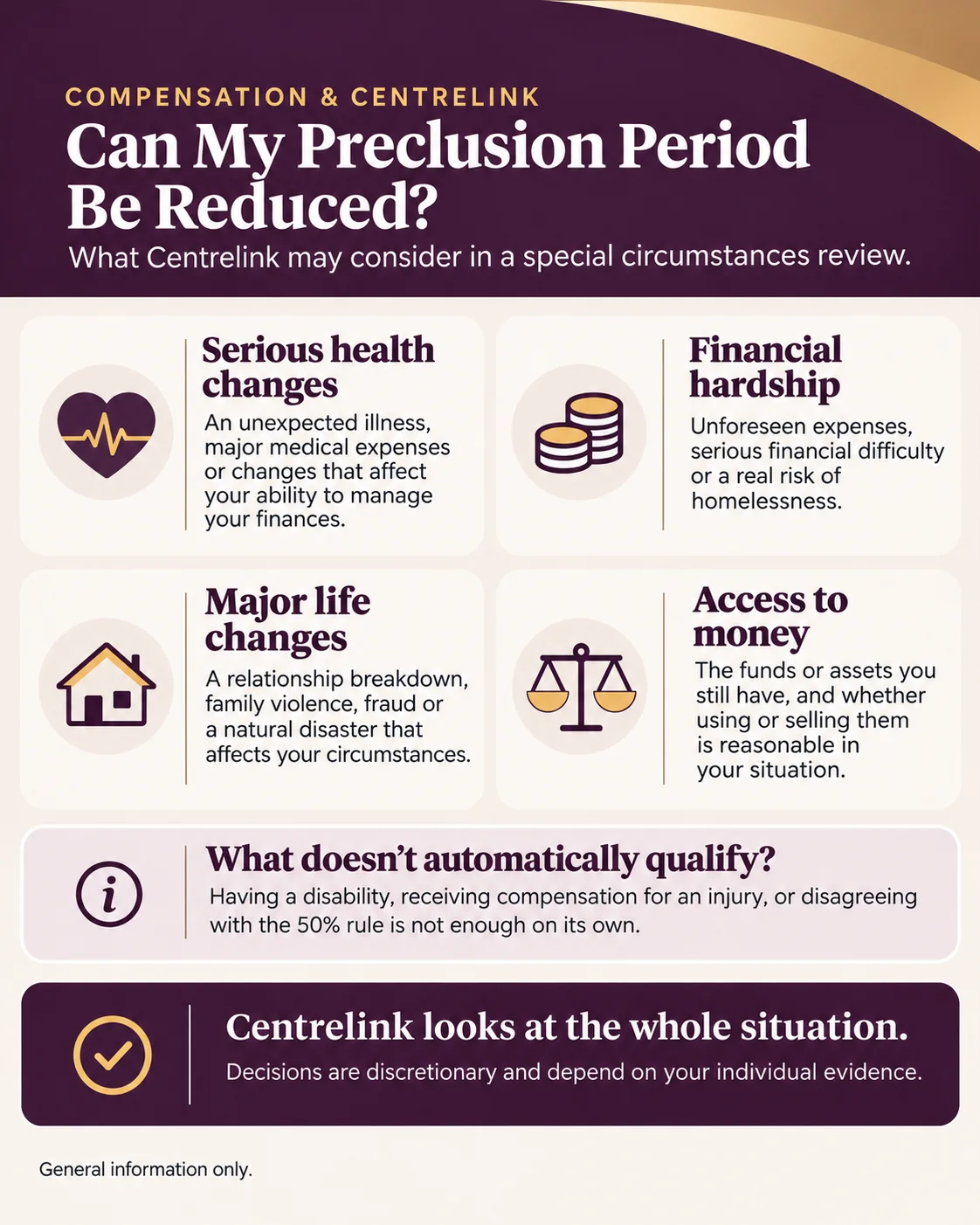
Centrelink doesn’t automatically exempt someone from a compensation preclusion period because they have an illness or disability. However, Services Australia can consider reducing the period in exceptional circumstances, particularly where unexpected health problems or serious financial hardship have changed someone’s situation.
Where a settlement includes compensation for lost income, Centrelink may apply a preclusion period, during which payments such as the Disability Support Pension, JobSeeker and Carer Payment are generally not payable. The rules differ between weekly compensation and lump sum settlements. Our Centrelink preclusion period guide explains how the period is calculated.
Here’s when a review may be possible, what Centrelink considers and how to ask for one.
A medical exemption isn’t the same as a compensation exemption
There are two Centrelink rules that are sometimes confused. They work differently.
If you receive JobSeeker, a medical certificate may temporarily exempt you from looking for work or meeting other mutual obligation requirements. That doesn’t change how Centrelink assesses compensation, and it won’t shorten a compensation preclusion period.
For compensation matters, the relevant rule is called special circumstances. It allows Services Australia to reconsider the effect of compensation in exceptional cases, including some involving serious illness or financial hardship.
Not every Centrelink payment is affected by the compensation recovery rules. Carer Allowance, for example, is generally outside those provisions. Other insurance benefits may also be treated differently. Check how your particular payment is assessed before assuming a preclusion period applies.
What are special circumstances?
The special circumstances rule sits in section 1184K of the Social Security Act 1991. Centrelink only applies this discretion in exceptional cases, and usually because of a combination of factors rather than one issue alone.
If special circumstances are accepted, Services Australia may disregard some or all of the compensation. Depending on the case, this may reduce a preclusion period, change how periodic compensation affects income support, or reduce a related Centrelink debt.
Disagreeing with how the preclusion period was calculated is generally not enough. The Social Security Guide states that the perceived unfairness of the 50% rule, by itself, is not a special circumstance.
Can serious illness or disability make a difference?
Yes, but Centrelink looks at how your health affects your particular circumstances.
Having a disability or serious medical condition doesn’t automatically qualify you. Services Australia’s guidance sets a high threshold, including considering whether your ill health is more severe than that experienced by most DSP recipients. The injury or illness you were compensated for will generally not be enough on its own.
Other circumstances may strengthen a request. For example, you may have developed an unexpected illness after settlement, faced substantial medical expenses that weren’t anticipated, or experienced a change in health that affected your ability to manage your finances. A reduced life expectancy, or an addiction or mental health condition outside your control, may also be relevant.
Centrelink looks at the whole situation, not simply the diagnosis.
What else does Centrelink consider?
Centrelink also looks at your financial circumstances. These usually fall into three broad themes:
- Unexpected financial hardship: an unforeseen event, significant additional expenses or circumstances that create a real risk of homelessness.
- Changes after settlement: a relationship breakdown, financial abuse, fraud, natural disaster or other major change that affects how the settlement money can support you.
- Access to your money: whether you still have funds or assets available, and whether selling an asset would be practical or could seriously affect your health.
Using compensation to buy a home or pay off a mortgage generally won’t support a request. An exception may apply where the home has been substantially modified for your disability and similar housing would be hard to find.
How to ask for a special circumstances review
If you’re struggling financially during a compensation preclusion period, contact the Centrelink Compensation Recovery team and explain what’s changed.
Services Australia may ask you to complete a Compensation Recovery Statement of Financial Circumstances (SS484) and provide supporting documents. These could include medical reports, bank statements, evidence of unexpected expenses and information about how your compensation money has been used.
The more clearly you can explain what happened and why your current situation is exceptional, the easier it will be for Centrelink to assess your request. You generally need to have claimed the relevant income support payment for a preclusion period reduction to be considered.
If Services Australia refuses your request, you can ask for a formal review of the decision. Further review rights may be available through the Administrative Review Tribunal.
Special circumstances may be granted from a future date where financial hardship is imminent. If your funds are running low and a significant part of the preclusion period remains, it can help to raise this before the money runs out.
How HFI can help during a compensation preclusion period
A compensation settlement can leave you needing to cover everyday expenses for months or years without Centrelink income support.
Planning ahead can help you understand how long a compensation preclusion period may last, what income you’ll have during that time and how to manage the settlement funds so they can support your longer‑term needs.
HFI works with clients before and after settlement, alongside their compensation lawyers where legal questions arise.
Worried about Centrelink after receiving compensation?
If you’re facing a preclusion period or struggling to understand your options, contact HFI to discuss whether further financial advice may help.
Call 1300 10 44 99 Read: Preclusion Period GuideRelated reading
- Compensation Recovery Statement of Financial Circumstances form (SS484), Services Australia
- Preclusion periods for Centrelink compensation recovery, Services Australia
- Social Security Guide 4.13.4.20: Factors to consider when determining special circumstance provisions, DSS
- Social Security Guide 4.13.1.50: Exemptions from the compensation provisions, DSS
- Social Security Act 1991 (Cth), current compilation, Federal Register of Legislation
- HFI: Centrelink Preclusion Period: What It Means for Your Financial Future
Important information
This article is general information only and does not take into account your personal circumstances. Compensation settlements can have Centrelink, tax, legal and financial planning consequences that vary significantly depending on your situation. Special circumstances decisions are discretionary and depend on the evidence provided in each individual case. You should seek advice from qualified financial, legal and tax professionals before making any decisions. Centrelink rules, preclusion period calculations and thresholds change over time. Verify current information with Services Australia before acting. HFI does not provide legal advice or tax agent services unless expressly stated. You should check legal settlement wording with your lawyer and tax consequences with a registered tax professional.
Health & Finance Integrated is a Corporate Authorised Representative of Able Financial Services, ABN 27 646 319 164, AFSL 530596, Shop 6, 23 Hassall St, Parramatta 2150 NSW.